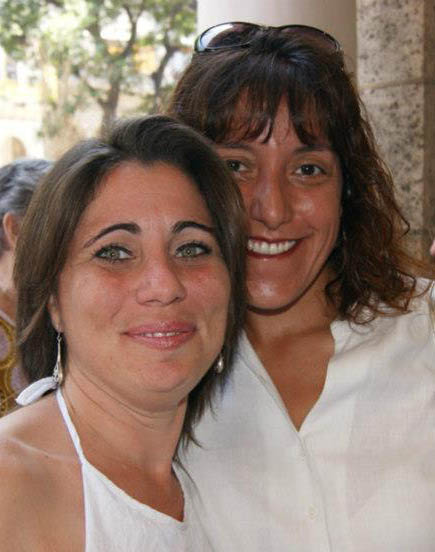
This was my hair?!

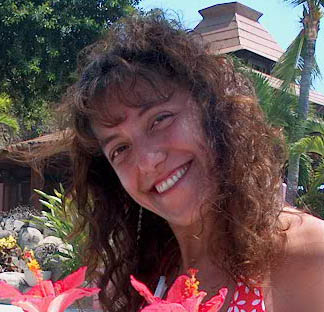
Jeff and I... about 16 years ago.

Jeff and I… about 16 years ago.

The photo that you see in this entry was taken about 16 years ago. It was at my mother’s 70th birthday party. I like this photo very much because it brings happy memories. When that photo was taken, Jeff (my now husband) and I had been dating for about 4 years and we were very much in love.

I have this photo in the refrigerator because it reminds me of all that good time in our lives. Nevertheless, in the last months that photo is a continuous reminder of something else: I used to have beautiful healthy hair. What in the world happened to it?!

Just one of the locks of hair falling over my shoulder in the photo equals to my whole hair now. It is sad to see what it once was. I guess this happens also with the whole aging process: body, skin and hair never get to be what they used to be in our youth. Up to a point the only solution is resignation, because it is true that it is impossible to stop time. We need to embrace our new selves and get the best out of it.

Nevertheless I still refuse to embrace the current state of my hair. I believe there is much I can do in order to improve it. So, I am doing everything I can in order to achieve something close to what I had one day.

My hair had been terribly damaged and abused even before the alopecia showed up; it had thinned considerably and it was mostly dry and lifeless.

Therefore, I have decided that if I recover my hair I will stop the compulsive drying, styling, dying or sun exposure. I will focus in good healthy food and vitamins. I will keep taking the Biotin (will talk about it later on a different entry), a multivitamin, I will keep using the minoxidil; I will invest in good shampoos, and I will try as much as I can to get my stress under control.

And I swear it is not vanity (or maybe it is)… it is just that I miss my hair!
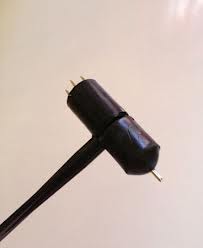


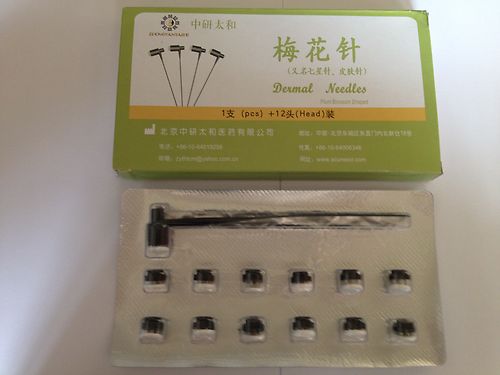
The seven stars mallet

According to the Wood Library Museum of Anesthesiology  the Chinese mallet http://woodlibrarymuseum.org/museum/item/503/moxibustion  (also known as qixingzhen and plum-blossom needle tapping) is a Chinese ancient practice related to acupuncture. The mallet is made out of flexible plastic and it has typically seven needles in the head.

One has to grab the mallet by the handle and repeatedly tap the area of the body where the acupuncture points are. The library goes on to say that “the force and speed with which the tapping is applied varies, based on the purpose and location of the therapy. It may be used for a number of conditions including headache, arthritis pain, dysmenorrhea, stomachache, insomnia, constipation, and certain skin diseases,” including alopecia.

Chinese Mallet

Chinese Mallet

I was kind of surprised by the lack of information on this device on the Internet and I only learned about it because of my nephew, who learned about it through his mom (my wonderful sister in law, Laura).

Laura is the wife of my brother the neurologist, they met in medical school long time ago. And while he pursued a career in neurology, she did it in natural medicine. She has a huge knowledge in homeopathy, acupuncture and other natural alternatives to medicine. She even went to China to study acupuncture.

Well, now I know that when my nephew was diagnosed with alopecia areata and looked for the help of traditional medicine, Laura insisted on trying the mallet. Finally he agreed (he is already an adult… so no easy to tell him what to do) and, according to him, after the first couple of weeks of using the mallet he started to see hair re-grow.

So, I started, everyday for three minutes that I split between the bald spots. The spots ended up covered with blood, but apparently that is how it is supposed to be. Then I cleaned the spots with alcohol and  repeat the following day.

On my last trip to Mexico I met with Laura and she asked me to bring it out the mallet to show me the correct way to do it. She did it harder than I ever did giving me some breaks to recover from the pain. That session with Laura draw a lot of blood… I could see the faces of my brother and sister sitting in front of me quite impressed. She told me that I didn’t have to use it every day, I could take breaks but I have to tap more strongly.

In one of the few websites that talk about this therapy I found a link in  http://www.ehow.com/how_5771914_use-acupuncture-treat-hair-loss.html

I have seen some hair re-grow. But I have to confess that by know I have no idea what has worked and what not of the many things I have done. I will talk more about my incipient (but precious) hair in a following post.

The almighty Chinese mallet

Martillo chino

As I have mentioned in previous postings, it turns out that now that I have alopecia areata I have found out that a bunch of other people have had it too. One of those affected by the disease was one of my nephews, who told me that he has had two bouts of bald spots and no recurrence in the last two years.


When he found out that I had Alopecia he got in touch with me and he told me: “I really recommend you to use the Chinese mallet.”


“What is that?” I said, and he explained that it was a little mallet with little needles in one end. To use it one has to basically hammer the area affected with the needles and one has to expect blood to come out.


After a few inquiries here in Cuba I realized there was NO way that I could find such a mallet in here. I got in touch again with my nephew and asked him if I could use a fork for the same purpose. He said “no,” it had to be the Chinese mallet. So he sent me his with my sister.


In the minute I touch the device I knew the procedure was going to hurt, but my nephew told me he started to see hair in his bald spots very soon after starting to use the mallet. He also sent me by email a link to a video that show how to use it:


You saw the video? You saw that BaldieGirl saying that it is painful? Well, let me tell you something: it is painful and bloody.

I am using it, although right now I am taking a break from it. In a future entry I will talk more about it and more about how my nephew got his hands on this mysterious device.

What is Minoxidil…?

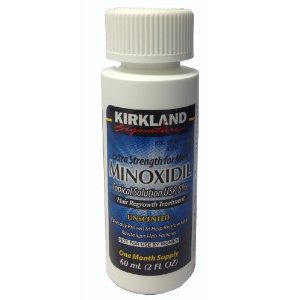
Rogaine's 3 month treatment  costs 53 dollars in one of the U.S. more popular pharmacies (Walgreens), compared to the 16 dollars I paid for the same amount under the generic Kirkland brand.

Rogaine’s 3 month treatment costs 53 dollars in one of the U.S. more popular pharmacies (Walgreens), compared to the 16 dollars I paid for the same amount under the generic Kirkland brand.

Well it turns out that the magical power that Minoxidil has to re-grow hair was found by accident. Yes, by accident!

Reading through the internet I found that Minoxidil (the generic name of the drug) was sold first with the commercial name of Loniten as a medication to treat high blood pressure. Nevertheless the patients taking this medication started to notice that their hair was growing, or re-growing, or an excess of hair in parts of the body other than the scalp (such as facial hair).

Minoxidil is hardly the only medication found by accident; drugs such as valium, penicillin and even Viagra were also discovered by accident.

After being approved to treat hair loss in the U.S. Minoxidil was commercialized with the name of Rogaine, the treatment was somewhat expensive but in the mid 90s the patent expired and nowadays one can find Minoxidil in a generic version for less than half of what Rogaine used to charge.

The treatment is only recommended for people with hereditary hair loss (androgenic alopecia), and as said in the last post the label says that one should not use it if the hair loss is patchy and sudden (as it is in the case of alopecia areata). Nevertheless I have found on the Internet (and with my own dermatologist) that Minoxidil tends to work in order to stimulate hair grow in cases of alopecia areata.

Most of the documents I read that talk about this drug and its use for androgenic alopecia, say that in order to maintain the hair one has to continue to use it indefinitely. It is stopped the hair loss will return. But I have also read that this is not the case for alopecia areata. Once the follicles have been stimulated and they start to produce hair again one can stop the medication and the hair won’t fall out.

I have to say that I don’t feel comfortable stopping the Minoxidil anytime soon. I am starting to see some re-grow of very fine white hair and I don’t want to loose the little I have gained! Not now and not ever.

Minoxidil… for men?

This is the Minoxidil I am using with a dropper, 1 ml twice a day.

This is the Minoxidil I am using with a dropper, 1 ml twice a day.

As mentioned in previous posts my sister arrived to Cuba from Mexico for a short vacation on April the 15th. She brought with her two main things that were not available in Cuba and that I have been using since then: one was the antidepressant (that I already talked about in http://mydearhair.com/2013/05/22/not-depressed-but-in-need-of-antidepressants/), and a bottle of Minoxidil 5%.

I think I mentioned before that when I discovered the first two bald spots I started using the Minoxidil 2% immediately. I had bought it time ago when I started noticing an overall thinning of my once abundant hair. However I never got to be disciplined with the required “two times a day” application. The instructions say that it would take at least 4 months to notice some progress. I don’t think I ever passed from one week of continues used.

Nevertheless I had it here and I started immediately. But also, during those first days of my alopecia areata I read that the Minoxidil 2% (which is the one for women) was not really effective in the treatment of this disease. So I asked my sister to bring the 5% solution with her.

In Mexico, by the way, it is pretty expensive. A small bottle that lasted less than a month was about 40 dollars. Nevertheless I was surprised to see that my medical insurance covered the cost of it.

I also order some from the U.S. and a few weeks after it was brought to me by a “mule” (someone that makes his living bringing things from the U.S. to Cuba) for a small 15 dollar transportation fee. The one I bought in the U.S. (via Ebay) was 16 dollars for a three month treatment (something I can afford for the rest of my life, if needed).

Since then I have religiously used the Minoxidil twice a day (1 ml each time as indicated) and I am starting to see some changes but I am not sure if I should attribute this to the Minoxidil or to any of the many other things I am doing or to all of them.

Anyway I will talk about the changes in a later post.

In the warnings included in the label of this mediation it says that it should not me used if (among other things) one is a woman, has patchy hair loss, and has no family history of hair loss… (check, check, check…).

Nevertheless the dermatologist said that I should continue to use it since it has proven to be effective in the treatment of alopecia areata.

I will report any changes, although I am doing so many things now that I will not know to what to attribute them to.

Laser Therapy

It was less than a month after the diagnosis when my dermatologist, Dr. Silvia Garcia, told me that she was going to prescribe also 7 sessions of laser therapy.

By then I was already getting the cryotherapy, the cortisone, the minoxidil (the 2% solution and I was still waiting for the 5% solution that was brought by my sister) and the placenta lotion and shampoo. On top of that I was running and taking the flower therapy to control my anxiety. The Zoloft was still yet to arrive.

So, there I went, to the physiotherapy department of the Clinica Central Cira Garcia (where, as said before, most foreigners get medical attention in Cuba). A very nice doctor (whose name has slipped my mind) booked me for 7 consecutive laser therapies.

The Laser Therapy, according to what I have read on the Internet, consists of laser light applied to the affected area in order to alter the cellular function. Some of the documents I found in my web research said that this treatment has proven to be effective in the treatment of all types of hair loss (not only alopecia areata). But there are also other websites that say that the efficiency of the laser treatment is yet to be proved.

Anyway, there was nothing to loose (other than time).

So starting on April the 8th I went to Cira Garcia for 7 consecutive appointments for my laser therapy. Each time, the doctor applied the laser light over the bald spots for several minutes and while doing so I felt absolutely nothing.

During the 7 days I didn’t see any immediate result and actually the spots kept growing. The doctor explained that the result was not going to be immediate, that I had to wait. Patience again was the key word.

Not depressed… but in need of antidepressants

This is seratonin, the neurotransmitter that Zoloft inhibits and that plays a role in the persons mood.

This is seratonin, the neurotransmitter that Zoloft inhibits and that plays a role in the persons mood.

Since the very first day I discovered my bald spots and I called my brother (the neurologist) in panic, he suggested that I should start an antidepressant regime. He said that for my case the best medication was Sertraline (commercially sold by the name Zoloft).

My first response at that time was that I was not depressed; actually I was very happy having just returned from a very nice vacation. Still he said that such medication would help control the anxiety that was causing the alopecia areata and the panic and the extra anxiety that resulted from the hair loss.

The following morning before going to the beach I looked unsuccessfully for the medication in two pharmacies close to our place. They didn’t have it. Then I talked about it with Carlos (my psychiatrist) at the beach that morning and he recommended waiting, not to take medications right away. I decided to wait.

But four weeks after the diagnosis I decided that I was going to find and take the medication. My mood swings were not many but they were very drastic. I could easily go from happy and optimistic, to sad and devastated, to anxious and terrified in any day.

After three very bad days I told Carlos that regardless his opinion I was going to follow the recommendations of my brother. At that moment he agreed that taking the drug could be beneficial in my case.

So I called every pharmacy in Cuba just to find that there was no Sertraline at the time in the coutry. Nevertheless my sister was visiting in a few days and she brought it with her.

The first few days after taking 50 mg of Sertraline in the morning I struggled with some nausea (pretty severe the first day) and also with some drowsiness.

But after more than a month on Zoloft I feel fine, the side effects are gone and I haven’t felt sad or anxious in several weeks, I feel optimistic and happy. My husband says that he could immediately tell when the drug was taking effect, because overnight I stopped talking about my hair all day long.

Grieving for our hair

Me, some years ago, with the hair I miss so much!

Me, some years ago, with the hair I miss so much!

Lately, since I discovered my bald spots, I have been thinking way to much about hair, about what it means, about what would I do without it, about how to fix my situation and about how much this disease has disrupted me.

I have been remembering a lot an episode with my friend Inocencia, in Houston. She had breast cancer and she underwent a successful mastectomy, radiation and chemotherapy and after several years she is still cancer free.

As it usually happens in these cases, during the chemotherapy treatment she lost all her hair. Unlike me (with alopecia areata), Inocencia was battling a deadly disease; one that could have easily taken her life. She knew that the hair loss was a result of the treatment and therefore it was temporary. She was certain that the hair was going to grow back. That is a certainty that patients with alopecia areata don’t have; we know it is likely the hair will grow back but we don’t know it for sure, we don’t know when it could happen, we don’t know when the bald spots will stop growing and we don’t know if we would loose our hair again once we have recovered.

I read once that the only certain thing about alopecia areata is its uncertainty.

Going back to Inocencia I remember well a conversation we had with a mutual friend, Sandra. Inocencia was happy the treatments were over and the hair was slowly growing back. Still she was wearing a wig. We asked her to show us her new hair and she did. She removed her wig and showed us her bald head filled with little hairs starting to show. She looked beautiful!

After that she told us that the worst part of her illness had been loosing her hair, it have been even worse than loosing her breast.

I was stunned. How can someone be focusing in the hair (that will come back)?! Instead of her breast (that will never come back)?! Or the illness (that could come back)?!

It was just beyond me, I couldn’t understand it. Besides, she looked beautiful bald.

After the first night, the first day and the first week carrying my bald spots and doing everything to conceal them I have understood (the hard way) the importance Inocencia gave to her hair. The breast is not visible, neither is the cancer, but the baldness is the first thing someone will notice… it is the first thing that tells the world that something is not right.

I know I am not going to die from alopecia areata, I know that it is likely the hair will grow back, but still I am grieving for the lost hair. I understand now.


Got to run!

maraton

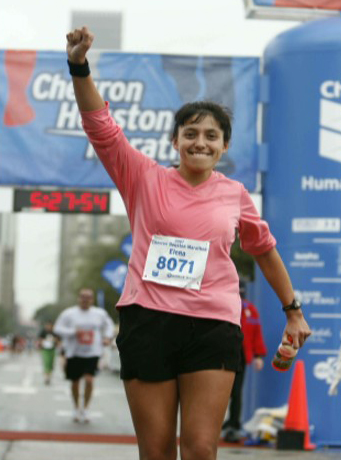
Me, crossing the finish line of my first (and so far only) whole marathon, in 2005.

The same Saturday of Veronica’s wedding (March 23) I called my mom at night. She told me that se had talked to my brother (the neurologist) about my situation, about the Alopecia Areata. She told me that my brother had said I needed to run.

I have been a runner for a good part of my adult life. For many years I ran every single day, even if it was just for 15 minutes. Something lacked in my day when ever I missed a run.

Nevertheless for the last few months I haven’t run much and I have actually let weeks and months go by without doing it.

The reason I gave myself for not running was the cough I battled and that apparently was a result of a strep infection (the one I am treating with penicillin), an injured toe (now healed), the pounds I gained and that made me feel heavy while running, and the fact that I was overall out of shape mainly because… I was not running.

It is a vicious cycle: not running made me a worst runner and made me want to run less.

Havana doesn’t help either, I live in a city where there are no good places to run. My favorite is the esplanade of 5th Avenue (5ta Avenida), but there is no shade, lots of smoke coming from old cars, traffic noise and very hard ground.

The issue here, according to my brother, is the endorphins. Basically I have got my body used to this morphine-like substance for years and then just stopped.

Endorphins (“endogenous morphine”), according to Wikipedia, “are endogenous opioid peptides that function as neurotransmitters. They are produced by the pituitary gland and the hypothalamus in vertebrates during exercise, excitement, pain, consumption of spicy food, love and orgasm, and they resemble the opiates in their abilities to produce analgesia and a feeling of well-being.”

So, my body could be resenting that daily endorphin “high” and therefore getting stressed and reacting in a way that was making my hair fall out.

Marathon

Me, finishing a half marathon, some years ago.

This is actually a well researched fact: runners do experience a “high” and one can assume that if a regular runner (like me) stops running (like me) he or she could experience withdrawal symptoms.

It made perfect sense. After the talk to my mom I called my brother and he told me: “you got to run again.” Immediately after hanging up I put my running shoes on and I went out for a three mile run. It was difficult, I had to stop several times and walk, but since then I have been doing it every day, even if it is just for 20 minutes and I have to say that after a month I am starting to feel again the benefits of the exercise: that daily energy, the regular doses of endorphins, a slimmer and stronger body, a clearer mind, and an overall sense of wellbeing. This may help my hair grow back.


The bald spots are growing!!!

168546_10151511730934378_124407759_n

Me and Veronica, on her wedding day, when the only thing I could think about was my hair.

Saturday March 23 was Veronica’s wedding day. She is my friend and housekeeper and I was chosen by her to be an official witness at the ceremony.

The day started with me baking some pecan tartlets for the wedding reception and then I had to wash my hair. Anyone that has read previous entries of this blog and anyone that has heard me complain about my hair problem know that washing my hair has become a nightmare. I don’t like it, it terrifies me, it gets my anxious… I do not enjoy it at all.

So I jumped in the shower and washed my hair. I felt so much of it fell from my head and when I came out of the shower I could see the bald spot on the top of my head looking at me from the mirror. It looked huge!

I got closer to the mirror and turned the lights on and yes, the spot was definitely bigger. I know that my dermatologist told me to avoid the mirror, not to look and the spots and stop paying attention to the hair that falls in the shower. But I can’t, I need to see and I rather see now than find a surprise in the future if the spot keeps growing.

Still, when we left to the wedding my bald spots were the only thing on my mind. I told my husband, Jeff, that I thought the spots were growing. He told me that I needed to calm down, “thanks for your support,” I said ironically, even when I knew that he is right, and that what I need is to calm down and keep doing what I am doing. I know I have to be patient, it is just so hard.

Later that day, after the wedding, we went to play tennis with some friends. Before arriving to the court I was still feeling down, depressed and worried, but the exercise worked its magic and after two hours of tennis I was smiling, happy, and enjoying life again