Not depressed… but in need of antidepressants

This is seratonin, the neurotransmitter that Zoloft inhibits and that plays a role in the persons mood.

This is seratonin, the neurotransmitter that Zoloft inhibits and that plays a role in the persons mood.

Since the very first day I discovered my bald spots and I called my brother (the neurologist) in panic, he suggested that I should start an antidepressant regime. He said that for my case the best medication was Sertraline (commercially sold by the name Zoloft).

My first response at that time was that I was not depressed; actually I was very happy having just returned from a very nice vacation. Still he said that such medication would help control the anxiety that was causing the alopecia areata and the panic and the extra anxiety that resulted from the hair loss.

The following morning before going to the beach I looked unsuccessfully for the medication in two pharmacies close to our place. They didn’t have it. Then I talked about it with Carlos (my psychiatrist) at the beach that morning and he recommended waiting, not to take medications right away. I decided to wait.

But four weeks after the diagnosis I decided that I was going to find and take the medication. My mood swings were not many but they were very drastic. I could easily go from happy and optimistic, to sad and devastated, to anxious and terrified in any day.

After three very bad days I told Carlos that regardless his opinion I was going to follow the recommendations of my brother. At that moment he agreed that taking the drug could be beneficial in my case.

So I called every pharmacy in Cuba just to find that there was no Sertraline at the time in the coutry. Nevertheless my sister was visiting in a few days and she brought it with her.

The first few days after taking 50 mg of Sertraline in the morning I struggled with some nausea (pretty severe the first day) and also with some drowsiness.

But after more than a month on Zoloft I feel fine, the side effects are gone and I haven’t felt sad or anxious in several weeks, I feel optimistic and happy. My husband says that he could immediately tell when the drug was taking effect, because overnight I stopped talking about my hair all day long.
Grieving for our hair

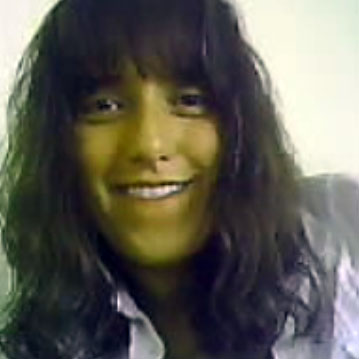
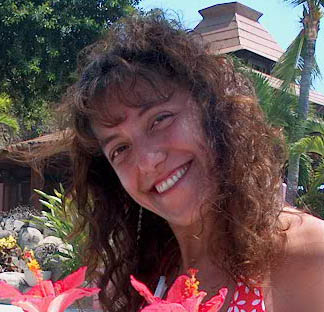
Me, some years ago, with the hair I miss so much!

Me, some years ago, with the hair I miss so much!

Lately, since I discovered my bald spots, I have been thinking way to much about hair, about what it means, about what would I do without it, about how to fix my situation and about how much this disease has disrupted me.

I have been remembering a lot an episode with my friend Inocencia, in Houston. She had breast cancer and she underwent a successful mastectomy, radiation and chemotherapy and after several years she is still cancer free.

As it usually happens in these cases, during the chemotherapy treatment she lost all her hair. Unlike me (with alopecia areata), Inocencia was battling a deadly disease; one that could have easily taken her life. She knew that the hair loss was a result of the treatment and therefore it was temporary. She was certain that the hair was going to grow back. That is a certainty that patients with alopecia areata don’t have; we know it is likely the hair will grow back but we don’t know it for sure, we don’t know when it could happen, we don’t know when the bald spots will stop growing and we don’t know if we would loose our hair again once we have recovered.

I read once that the only certain thing about alopecia areata is its uncertainty.

Going back to Inocencia I remember well a conversation we had with a mutual friend, Sandra. Inocencia was happy the treatments were over and the hair was slowly growing back. Still she was wearing a wig. We asked her to show us her new hair and she did. She removed her wig and showed us her bald head filled with little hairs starting to show. She looked beautiful!

After that she told us that the worst part of her illness had been loosing her hair, it have been even worse than loosing her breast.

I was stunned. How can someone be focusing in the hair (that will come back)?! Instead of her breast (that will never come back)?! Or the illness (that could come back)?!

It was just beyond me, I couldn’t understand it. Besides, she looked beautiful bald.

After the first night, the first day and the first week carrying my bald spots and doing everything to conceal them I have understood (the hard way) the importance Inocencia gave to her hair. The breast is not visible, neither is the cancer, but the baldness is the first thing someone will notice… it is the first thing that tells the world that something is not right.

I know I am not going to die from alopecia areata, I know that it is likely the hair will grow back, but still I am grieving for the lost hair. I understand now.


Got to run!

maraton

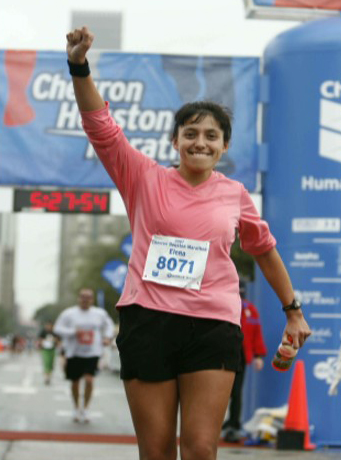
Me, crossing the finish line of my first (and so far only) whole marathon, in 2005.

The same Saturday of Veronica’s wedding (March 23) I called my mom at night. She told me that se had talked to my brother (the neurologist) about my situation, about the Alopecia Areata. She told me that my brother had said I needed to run.

I have been a runner for a good part of my adult life. For many years I ran every single day, even if it was just for 15 minutes. Something lacked in my day when ever I missed a run.

Nevertheless for the last few months I haven’t run much and I have actually let weeks and months go by without doing it.

The reason I gave myself for not running was the cough I battled and that apparently was a result of a strep infection (the one I am treating with penicillin), an injured toe (now healed), the pounds I gained and that made me feel heavy while running, and the fact that I was overall out of shape mainly because… I was not running.

It is a vicious cycle: not running made me a worst runner and made me want to run less.

Havana doesn’t help either, I live in a city where there are no good places to run. My favorite is the esplanade of 5th Avenue (5ta Avenida), but there is no shade, lots of smoke coming from old cars, traffic noise and very hard ground.

The issue here, according to my brother, is the endorphins. Basically I have got my body used to this morphine-like substance for years and then just stopped.

Endorphins (“endogenous morphine”), according to Wikipedia, “are endogenous opioid peptides that function as neurotransmitters. They are produced by the pituitary gland and the hypothalamus in vertebrates during exercise, excitement, pain, consumption of spicy food, love and orgasm, and they resemble the opiates in their abilities to produce analgesia and a feeling of well-being.”

So, my body could be resenting that daily endorphin “high” and therefore getting stressed and reacting in a way that was making my hair fall out.

Marathon

Me, finishing a half marathon, some years ago.

This is actually a well researched fact: runners do experience a “high” and one can assume that if a regular runner (like me) stops running (like me) he or she could experience withdrawal symptoms.

It made perfect sense. After the talk to my mom I called my brother and he told me: “you got to run again.” Immediately after hanging up I put my running shoes on and I went out for a three mile run. It was difficult, I had to stop several times and walk, but since then I have been doing it every day, even if it is just for 20 minutes and I have to say that after a month I am starting to feel again the benefits of the exercise: that daily energy, the regular doses of endorphins, a slimmer and stronger body, a clearer mind, and an overall sense of wellbeing. This may help my hair grow back.


Penicillin… could it be an infection?

On the day of the first cryospray therapy I got the results of the blood tests the doctor had ordered. It turns out that everything came back normal, everything but a throat culture test that revealed the high presence of streptococcus. It is true that my usually healthy self had been fighting a lingering cough for a big part of 2012 and the whole month of January of 2013. It started on March last year (more than a year ago) and it has been going on an off.

Back then I would have cough fits that would keep me awake, something really unusual for me. Still I didn’t pay a lot of attention to it and treated it mostly with over the counter cough syrup and medication that would at least let me sleep. The cough went away after two months or so, but not totally, and then in came back in January. Well, apparently it was due to a sinus infection caused by these bacteria.

I asked the doctor if this could also be the cause of my Alopecia Areata. She said that the lingering infection could have caused stress to my body and contributed to the onset of the Alopecia. That is, she said, on top of any other stress that is present in my life right now.

In any case she prescribed three penicillin injections, one each month. I have already had two and, I don’t know if it is because of that, but the cough is over (for good, it seems); I am also combining that with sinus saline washes.

Probably this won’t cure the Alopecia, but at least it would help me get healthy overall, and that can only be good.

Cryotherapy

432px-Cryogun

Cryotherapy bottle, like the one used by my doctor. (Photo: Warfieldian)

The following Thursday after the first visit with my dermatologist, Dr. Silvia, I went back to her for my first cryotherapy. It is and odd concept, at least for me. She puts liquid nitrogen in an aerosol device, while pouring it you can see something like a white gas coming out of the containers and if you stand by it you can feel the very cold sensation that such gas gives to your feet and legs. Once the liquid nitrogen is in the can, the doctor sprayed it over my scalp for about 2 or 3 minutes, moving my hair around and making sure that the whole head had been spray with the freezing gas.

The sensation went from refreshing, to good, then cold and, finally, almost painfully freezing. It is really cold, like when you leave an ice over your skin for a long time. I was just hoping that the rest of my hair wouldn’t freeze up and fall down as a result. It didn’t.

The purpose of this therapy, my doctor explained, is to stimulate the follicle. With Alopecia Areata the follicle usually stops producing hair for some time because of an autoimmune reaction (a mistake from you immune cells, basically), and the objective is to keep that follicle alive through stimulation so when the immune attack is over, the follicle would be ready to produce hair again.

I read some studies published on the Internet and they mentioned a success rate of the cryotherapy for Alopecia Areata, they were of less than 50%. So, I think it is worth it to keep it going. So far I have had 5 treatments and no hair has re-grown yet. There are many other things that I am doing in order to stop this disease and get my hair back. I am convinced something has to work.

More common than you think

Snapshot of me 2 copia

Me with my full hair… a couple of years ago.

After 10 days since the discovery of the Alopecia Areata, and after being in a truly emotional roller coaster trying to cope with the condition and at the same time keep my anxiety controlled I decided to see a dermatologist.

So far, I have gotten opinions from my brother (the neurologist) and by my friend Carlos (the psychiatrist), but on Tuesday March the 17th I went to the hospital where most of the ex pats go in Havana, it is called Clinica General Cira Garcia. I was there helping a friend who is not fluent in Spanish and needed some translation with her doctor.

After her appointment I asked her physician, Dr. Teresa, if she could recommend a dermatologist for me. “What is your problem,” she asked, “I have Alopecia Areata,” I responded. She stood up from her desk and without even asking permission she started examining my head. “Don’t worry. This is more common than you think,” she said and then she added the same thing I heard so far: it is stress related, stop thinking about it and your hair will eventually grow back.

She gave me the name of Dr. Silvia Garcia. She is my new dermatologist. Two days after I had the first appointment with her.

Terror in the shower!

As an enthusiast runner for most of my adult life I am used to sweat a lot, and therefore I am also used to take a lot of showers. In the last 14 years I have lived in places with hot, humid, and long summers (Houston and Havana) and during those hot days (after a run or not) I would love to get in the shower and wash my hair or at least get it completely wet to get refreshed.

This has changed in the last month. I still love to take showers as long as my hair is not involved. But washing my hair has become one of the bigger (if not the biggest) trigger of my anxiety.

So, I washed it the Sunday after I discovered the spots and after my trip to the beach (March 10). It went OK. But since then I barely touched my hair. It was Thursday, March 14, when I decided that I needed to wash it again.

I got in the shower I got my hair wet and massaged my head with the shampoo and when I rinsed it I saw hundreds of hair strands ending up in my hands. I just broke down.

But later this is how I try to reason about the subject: if I hadn’t touch my hair in four days (no combing, no styling, no water, no nothing) and then I wash it, wouldn’t that be the perfect opportunity for my hair to shed the natural shed accumulated in four days? I want to believe it is so.

Or maybe it is just the natural shedding amount and I just have lost completely my objectivity.

Or maybe the shedding caused by the Alopecia Aerate hasn’t stopped (I hope this is not the case).

Still, my afternoon was horrible. I called my mom and cried, I called my brother and cried and I cried my eyes out by myself.

December 2012 382 copia

I loved washing my hair!

My brother, the neurologist suggested an antidepressant, Zoloft (which happens not to be readily available in Cuba), and then said that I should have a little bit of clonazepam (a quarter of a pill) to control extreme anxiety states such as this. I will try the clonazepam, and I decided to leave the antidepressant pill for future consideration.

From now on, I will focus on washing my hair three times a week and be brave about it… maybe with the help of a little clonazepam before the shower.

Flowers for my head

Healing myself with flowersOn March 12, after my massage day, I had an appointment with Carlos, my friend and psychiatrist. I was not supposed be a counseling session, but and evaluation of my emotions according to specific questions design to help determine which was the best mix of healing flowers for me.

As mentioned in a previous posting these flowers, called Bach Flowers, were discovered by a bacteriologist called Edward Bach and are believe to have healing properties, primarily for conditions such as depression, anxiety and stress.

Carlos is my friend, and a very intelligent man, so it was easy to talk to him. We discussed a little how this condition makes me feel: anxious, afraid, insecure, and desperate… among other things. We also talked about my moods in the last few days and then he asked me questions which help him decide that I am a woman that is over controlling, totally impatient, very apprehensive, one that tends to worry to much about her health and that of her loved ones. “I could have told you that in ten seconds,” my husband joked.

Carlos said that those characteristics of my personality were creating extra stress in my body and could be a contributing factor to the alopecia. He also said that the events on my life such as our imminent repatriation to the U.S. and the changes that come with that could be causing stress, along with some other things.

So I have my flowers now, I have been taking 12 drops a day (4 drops 3 times a day) for a whole month and generally I feel much better, less anxious, less afraid. Nevertheless I still have very bad moments most of them triggered by the hair I see falling when I wash it, is it normal? Is it more? Will I get more spots? And then I get anxious again!